



Since the current from your body is very small it’s understood that R2 has a high value like 10 Megohm to maximise the voltage over R2 so it can be detected by input pin 1 of gate IC1.A. R1 has been added to prevent electrostatic discharge (ESD) energy from damaging the inverter gate input. ESD may occur when you have been charged with an amount of electro static energy by walking on a carpet with rubber soles. You can increase the sensitivity of the detector by experimenting with lower values fore R1 e.g. 1 kO and a smaller metal plate.
The value of pull-up resistor R3 is calculated such that the current through LED1 is below its maximum continuous rated value. Most regular LEDs are 20 mA types. The circuit still works if you remove LED1 and just have the pull-up resistor R3 connected to output pin 2 and then connect a microcontroller input pin directly to pin 2. Do check however that the microcontroller has a weak pull-up (i.e. to +VDD) at its port line.
Circuit diagram:
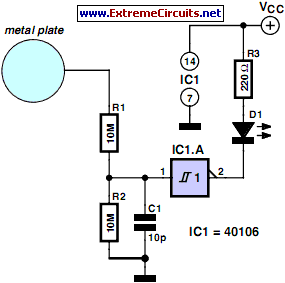
Simple One-Wire Touch Detector Circuit Diagram