



Circuit diagram:
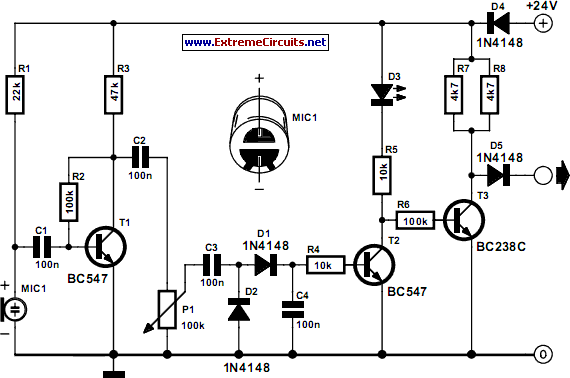 Acoustic Sensor Circuit Diagram
The sensitivity of the circuit can be adjusted using potentiometer P1 so that it does not respond to ambient noise levels. Diodes D1 and D2 recitfy the signal and C4 provides smoothing. As soon as the voltage across C4 rises above 0.5 V, T2 turns on and the LED connected to the collector of the transistor lights. T3 inverts this signal. If the microphone receives no sound, T3 turns on and the output will be at ground. If a signal is detected, T3 turns off and the output is pulled to +24 V by R4 and R5. In order to allow for an output current of 10 mA, T3’s collector resistor needs to be 2.4 kΩ. If 0.25 W resistors are to be used, then to be on the safe side this should be made up of two 4.7 kΩ resistors wired in parallel. Diode D4 protects the circuit from reverse polarity connection, and D3 protects the output from damage if it is inadvertently connected to the supply.
Author: Engelbert Göpfert - Copyright: Elektor Electronics