



The temperature-dependent voltage at the non-inverting input to opamp IC1.A leads to a voltage variation at the output (pin 1) from 4 V at 30 °C to 4.72 V at 60 °C. The second stage (IC1.D) converts this relatively small swing and inconvenient voltage offset into the range 8 V to 12 V suitable for the fan. The third operational amplifier works as a comparator. At room temperature its output sits at nearly 12 V and pulls the output of the second stage with it, switching transistor T1 off. If the temperature exceeds 35 °C the comparator switches; diode D1 blocks and the control circuit can operate as normal.
Circuit diagram:
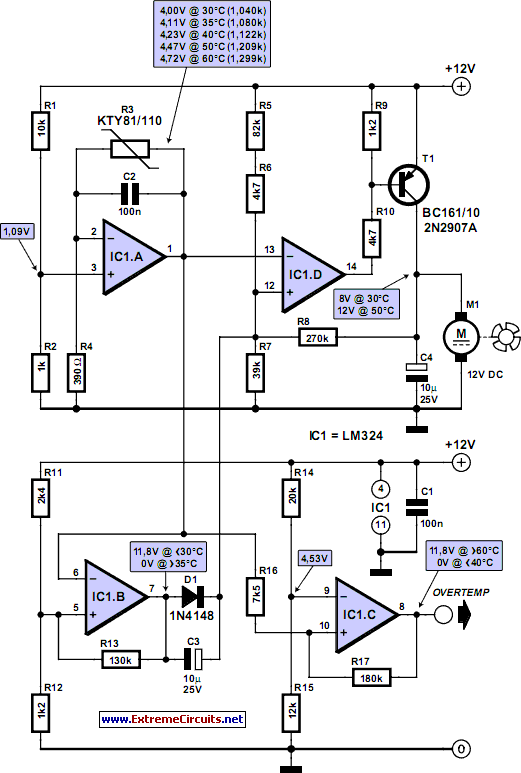 Gentle Breeze Circuit Diagram
The hysteresis of the comparator has been set so that the comparator state will only change again, turning off the fan, if the temperature falls below 30 °C. Capacitor C3 ensures that the fan is run at full voltage for about 0.7 seconds immediately after switch-on, so that the motor will start reliably. The fourth opamp in the LM324, IC1.C, is used to create an over-temperature warning indicator. This is necessary in case the fan, even running at full speed, is not able to provide enough cooling, or, because of a fault, cannot reach full speed. This opamp is also configured as a comparator.
If the sensor temperature reaches a value of 60 °C, the comparator output goes high (to nearly 12 V). The output will only go low again (nearly 0 V) if the temperature falls below 40 °C An LED (with series current-limiting resis tor) can be connected to its output (pin 8); alternatively a transistor could be used to drive a relay. The circuit is sufficiently accurate without adjustments, but metal-film resistors with a tolerance of 1 % should be used. Some of the values used are from the E24 series. The supply voltage is used as a reference throughout, and so should be well regulated: a 7812 voltage regulator is adequate.
Author: Rainer Reusch - Copyright: Elektor Electronics